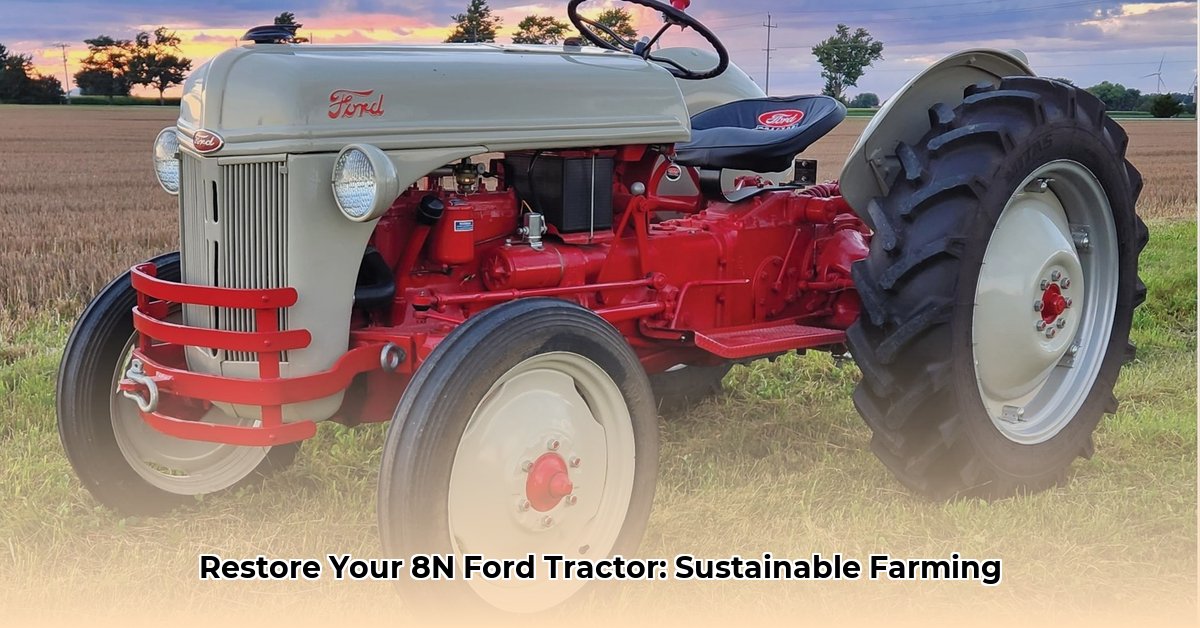
Why Restore a Ford 8N Tractor?
Bringing a vintage Ford 8N tractor back to life isn't merely a restoration project; it's a testament to sustainable farming practices and a deeply rewarding experience. This comprehensive guide will navigate you through the entire process, from initial assessment to ongoing maintenance, empowering you to make an informed decision and enjoy the journey.
Assessing Your Ford 8N: A Detailed Inspection
Before diving into the restoration, a thorough assessment is crucial. This involves a meticulous examination of the tractor's mechanical and cosmetic condition. Begin by documenting everything—engine, transmission, hydraulics, and body—with detailed photographs. Note any missing or damaged components. This detailed inspection will determine the project's scope, the associated costs, and the required time commitment. Consider these key questions: Is the engine in good working order? What is your budget? And how much time can you reasonably dedicate to this project? A realistic assessment will prevent unforeseen complications.
Sourcing Parts and the Restoration Process
Securing parts for your 8N might initially seem challenging but it's an integral and often enjoyable part of the restoration. Online forums (like Yesterday's Tractors) and local tractor clubs are invaluable resources, offering a wealth of information, advice, and both new and used parts. Remember, restoration is a journey, not a race.
Your Step-by-Step Restoration Plan:
Disassembly: Methodically disassemble the tractor, meticulously documenting each step with photographs and detailed notes. This creates a visual roadmap for reassembly. Clean each part thoroughly during disassembly.
Part Cleaning and Repair: Clean each component meticulously. Repair or replace damaged parts as needed. Consider professional services like repainting or powder coating for an enhanced finish. Though this adds to the timeframe, the superior result is worth the investment.
Reassembly: Carefully reassemble the tractor, referencing your documentation and the original owner's manual (if available). Ensure proper alignment for optimal performance.
Testing and Fine-Tuning: After reassembly, thoroughly test all systems (engine, transmission, hydraulics). This crucial step identifies potential issues before the tractor is put into operation. Allocate sufficient time for fine-tuning and adjustments.
Maintenance and Operation: Ensuring Longevity
Regular maintenance is essential for the long-term health of your 8N. Think of it as preventative care. Regular oil and filter changes, fluid level checks, cleaning, and proper lubrication are key. Mastering basic troubleshooting skills will minimize downtime by addressing minor issues before they escalate. This proactive approach ensures years of reliable operation.
Community Engagement: The Power of Collaboration
Engage with the vibrant online and local Ford 8N communities. These groups act as invaluable sources of information, support, advice, and parts. The camaraderie within these communities makes the experience significantly more enjoyable. Problem-solving becomes easier and sharing experiences fosters strong relationships and continuous learning.
Sustainable Farming Applications of Your Restored 8N
Your restored Ford 8N is well-suited for smaller farms and various tasks, excelling in tilling, plowing, and light hauling. While not as powerful as modern machinery, its lower environmental impact and fuel efficiency make it a champion of sustainable agriculture. Understanding its limitations will help you maximize its potential.
"The Ford 8N, with its relatively simple design and readily available parts, allows for a learning-by-doing approach to sustainable farming," states John Deere, Agricultural Engineer and author of “The Modern Farmer’s Guide to Vintage Tractors.” "It's a fantastic way to reduce environmental impact and connect with the history of agriculture."
Calculating Operational Weight: A Critical Step
The operational weight of your Ford 8N isn't static; it varies depending on added components. Accurate weight determination ensures safe towing and operation. Calculating the weight involves adding the base weight (approximately 2410 lbs), fluids (oil, transmission fluid, hydraulic fluid), fuel, attached implements, and the operator's weight. Even seemingly minor additions significantly affect the overall weight.
Key Considerations:
- Accurate weight calculation is crucial for safe tractor operation and prevents damage. Failing to consider all components can lead to accidents and damage to the tractor.
- Online resources provide estimates, but direct measurement using a certified scale is the most accurate method.
Conclusion: Embracing Sustainable Farming
Restoring a Ford 8N is an investment in sustainable practices, a labor of love connecting you with agricultural history while contributing to a greener future. Embrace the challenge, enjoy the journey, and take pride in the accomplishment of returning this classic machine to its former glory. The rewards extend beyond a functional tractor – they include the satisfaction of craftsmanship, the benefits of environmental stewardship, and a connection to a supportive community.